PRISON JAPAN / day three


SUNDAY, MAY 20, 2007 ---- Relative Comforts.
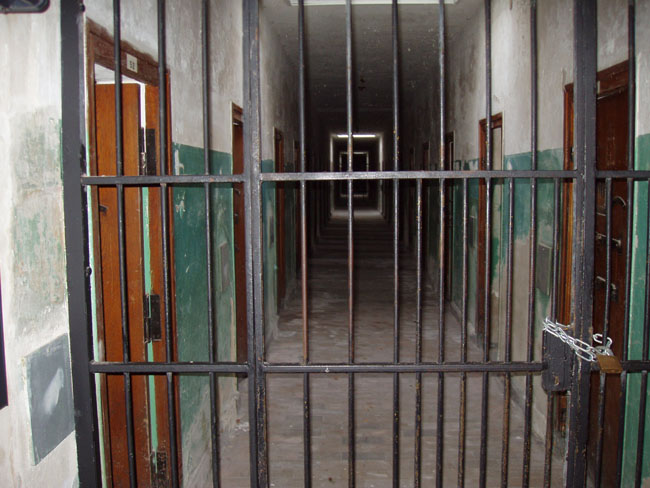
The first day or two following my arrest in west Tokyo I was in denial and was convinced that I would be imminently released... whatever the naysayers in the exercise yard (read: cubicle) would claim. As the week marched on realization slowly sank in: this was more serious than a slap on the wrist, and this might well turn into a long haul. All the while I was missing appointments and assignments and failing to turn up to work, which as a punctual motherfucker really pained me. In fact it pained me more than the physical discomforts of being in jail. If only I had a phone to call my students and let them know why I missed the lesson (or at least access to a phone). I had a dream I was crossing Showa Highway under the flyover near my old house at Iriya, just past the motorbike shop district, on the way to my mother and son class at Minowa, and I felt good about being back to normalcy... then I woke up and I remembered I was still in a cell. Just number 3, among all the other numbered prisoners. In jail they deliberately treat you like a number, they are always counting you, and they make it tough to do just the simplest things like making a phone call. It is all part of the routine -- instilling discipline. In my case, it wasn't warranted -- I figure I have discipline enough. In any case, even from the outset I was determined to treat my whole Asian jail experience as just an experience, something I could learn from, blog about, and hopefully profit from. I was an undercover reporter, and this was my holiday in Hell. Sixteen days seemed to be the perfect length for it. If they had released me on Day Two I wouldn't have had enough time to make sense of it. Had I been charged and tried and sentenced to one year in prison (the worst case scenairo, as I would later glean from my lawyer), I probably would have come out a totally different person. A harder man, and probably more assertive. As destiny would have it, that wasn't the fate for me.

About a year after my encounter with the Japanese legal system I was lying in bed in Ho Chi Minh City, Vietnam, watching TV. There came on an ad for an upcoming Japanese movie called Soredemo Boku Wa Yattenai ("I Just Didn't Do It".) I might have been staying in a good hotel room with the air-con on super cold, but instantly I was back in my cell. It was like someone had taken a camcorder into the Kitazawa Police Station, and filmed my daily life. The Internet Movie Database reports: "A young man on his way to a job interview is wrongly accused of groping a high-school girl on the train. He consistently denies the crime. But he is detained by the police and then charged. Most of the film consists of the numerous court sessions, and I found it totally gripping all the way.

"The point of the film is that the Japanese justice system is totally unjust. Astonishingly, 99.9% of defendants are found guilty. In Japan there are no juries - judges make the decisions themselves. (This system is going to change in a few years, so that for serious crimes the verdict is decided by judges and small juries together. But who knows whether this will make the system more just. Many Japanese people might feel a strong pressure to conform with authority and find the defendant guilty even if they don't think they actually are.)

"In the film we get an excellent look at how evil the system is. For a start, in Japan, the police can hold anyone for ten days without charge, and an extra thirteen days (I think) if the public prosecutor agrees. This is a very long time to be held without charge! The police repeatedly tell Teppei that if he confesses then he'll just be able to walk out of the police station - "it's only groping, it's just like a parking offence." But this is coercion and untrue. If he confesses, he can easily be charged and convicted. So the police are not allowed to say this. And in court, under oath, one police officer perjures himself by denying that he ever said it..."

I agree with what the author of this post (ed-25) says about the police coercion. I lived it.


CLOUDY BONGWATER SAYS ---- Australian Jails Are The Place To Be.
I work with a guy called Cloudy Bongwater and he's a stand-up comedian in Tokyo and he told me once that he's done time in three different countries, for what offences I do not know. I asked him which was the best country to be locked up in, and he answered easily: "Australia!", that being our mutual homeland. While I have never been a prisoner in Australia I have seen plenty of ex-prisoners there, and they kind of scare me, so on this point I will have to disagree with Cloudy; ipes of their machines. They were probably jacked on kakuseizai, the methamphetamine that has been the Japanese drug of choice since the Government distributed it to soldiers and workers during World War II, and of which these chimpira were doubtless both purveyors and consumers. They were waiting for the drug-induced hum in their muscles and brains to hit the right pitch, for the hour to grow suitably late and the night more seductively dark, before emerging from their concrete lair and answer the neon call of Roppongi...

The trouble is, John Rain comes walking down their overpass, and the drugfuelled chimpira feel compelled to challenge him. Or at least one of them does. It is only page 20, and the action is on again. Rain narrates:

"I prefer my violence sudden. Keeping him to my right, I stepped past him with my left leg, shooting my right leg through the same side immediately afterward and then sweeping it backward to reap his legs out from under him in osoto-gari, one of the most basic and powerful judo throws. Simultaenously I twisted counterclockwise and blasted my right arm into his neck, taking his upper body in the opposite direction of his legs. For a split second he was suspended horizontally over the spot where he had been standing. Then I drilled him into the sidewalk, jerking upward on his collar at the last instant so the back of his head wouldn't take excessive impact. I didn't want a fatality. Too much attention...

As other commentators have noted, that while Rain is ruthlessly and efficiently violent, he is also likeable. After assassinating the yakuza at the gym, Rain spends hundreds of dollars on drinks at a Nogizaka hostess bar, just to check up on his friend Harry's new girlfriend. Later in the book, he agrees to take on a difficult assignment he would rather do without, in order to avenge of the murder of the said friend, by the aforementioned girlfriend. And he kills the girl with his bare hands. If you ever wanted to be friends with a hitman, John Rain is probably your best choice. The guy is warm, beneath the cold hitman exterior. Nonetheless, he is able to kill at the drop of a hat... with no mercy or remorse.

"The facility occupied the ground floor of a gray commercial building hemmed in by rusting fire escapes and choked with high-tension wires that clung to the structure's facade like rotting vegetation. Across from it was a parking lot crowded with Mercedeses with darkened windows and high-performance tires, the status symbol of the country's elite and of its criminals, each aping the other, comfortably sharing the pleasures of the night in Roppongi's tawdry demimonde. The street itself was illuminated only by the indifferent glow of a single arched lamplight, its base festooned with flyers advertising the area's innumerable sexual services, in the shadows of its own luminescence looking like the elongated neck of some antediluvian bird shedding diseased and curling feathers..."

Pure noire... pure Tokyo!

Here is a description of my old quarter of town -- the Shitmachi district around Asakusa:

"I headed west. The din receded, to be replaced by an odd, depressing silence which hung over the area like smoke. Outside the tourist-fuelled activity of Sensoji, it seemed, Asakusa had been hit hard by Japan's decade-long decline.

"I walked, my head swivelling left and right, logging my surroundings. Hanayashiki amusement park sulked to my right, its empty Ferris wheel rotating senselessly against the ashen sky above. The esplanade beyond was given over mostly to a few pigeons that had wandered there from the nearby temple complex, the occasional flapping of their wings echoeing in the surrounding silence. Here and there were small clusters of homeless men smoking secondhand cigarettes. A mailman removed a few letters from the back of a postal box and hurried on, as though vaguely afraid he might catch whatever disease had decimated the area's population. The owner of a coffee shop sat diminished in the back of his deserted establishment, waiting for patronage that had long since vanished. Even the pachinko parlors were empty, the artificially gay music piping out of their entranceways bizarre and ironic...


WEDNESDAY, MAY 23, 2007 ---- Amnesty International Condemns Human Rights Abuses in Japanese Prisons.
A day or so after the ending of my TWO WEEKS IN HELL, I found this Amnesty report on the Internet, regarding human rights abuses in Japanese prisons. Some of the practices condemned in the report were actually inflicted upon me:

8 December 2000
ASA 22/009/2000
"The government of Japan must move on from putting pen to paper on human rights and improve human rights protection at home and in the region," Amnesty International's Secretary General Pierre Sane said at the conclusion of his five-day mission in Tokyo.
A delegation from Amnesty International's International Secretariat in London met with government officials, political parties, trade union activists, lawyers and human rights victims.
Death Penalty
A majority of the world's countries have stopped executing people. In Japan over 100 people are on death row and 52 of those could be killed by the state at a moment's notice. Only last week three prisoners, who each spent over ten years on death row, were executed in secret and without warning.
After meetings with the delegation, the Socialist Democratic Party, the Komeito Party, the Japanese Communist Party and Rengo (Japan Trade Union Confederation), all agreed to encourage public debate on the death penalty.
"Ultimately we want to see the death penalty eliminated from the law books," the Secretary General said.
Torture and ill-treatment
Secrecy also prevails in detention facilities where Amnesty International has concerns about torture and ill-treatment.
All detention facilities in the country operate extremely strict regimes with inmates forced to comply with arbitrary rules rigorously enforced by staff. Prisoners are often not allowed to talk with each other or even make eye contact. Punishment for flouting these rules includes being made to sit in the same position for hours at a time, sometimes over several months, and not being allowed to wash or exercise.
Some penal institutions still hold prisoners in a "protection cell" or hogobo as means of punishment. Inmates are held in metal or leather handcuffs, forced to eat like an animal, and to excrete through a hole cut in their pants. Such treatment is cruel, inhuman and degrading and must be stopped.
Hoshino Akiko's husband Hoshino Fumiaki is a political prisoner serving a life sentence for a murder he says he didn't commit. She told the delegation that he has been held in a hogobo twice - once for washing his foot after stepping on a cockroach. He is only allowed to write twice a month, is not allowed to make phone calls or keep a photo. Hoshino Akiko is not allowed to even touch her husband's hand when she visits him.
The Daiyo Kangoku system allows police to hold and interrogate suspects for up to 23 days despite the fact that there is a clear correlation between incommunicado detention and torture. The Japanese government should reform the Daiyo Kangoku system to ensure that detainees are given access to families, legal counsel and medical personnel if needed. Amnesty International regrets that recent revisions to the juvenile law did not include a ban on detaining children in this system.
"There is a very real chance to end torture and ill-treatment in Japan, it simply takes political will. The government can start by publicly condemning torture, ordering investigations into all allegations of torture and ill-treatment and bringing perpetrators to justice."
The government should order adherence to a code of conduct which conforms with international standards and there should be an independent complaints mechanism.
No safe haven for refugees
Although Japan is a party to the Refugee Convention, it accepts a dismally low number of asylum-seekers. Between 1994 and 1997 only one out of 516 asylum-seekers was granted refugee status. An unknown number of asylum-seekersare held in "landing prevention facilities" at airports and ports. Many of these people are deported before they even have the chance to apply for asylum and could be returned to face human rights violations in the country from which they fled.
Zaw Min Htut, an ethnic Rohingya, fled torture and persecution in Myanmar only to face detention in Japan. He said that in 1998, he was detained in a small room at Narita airport for two months where he said he had to buy his own food and was only allowed to shower once a week. He was transferred to an immigration centre for a further nine months. He told the delegation:
"What did I do wrong in Japan...they kept me for a long time. We are not criminals. We just want temporary shelter until we can return to Burma to see our families."
He said that at Narita airport he shared his small room with five Tamil men who were denied asylum and sent back to Sri Lanka.
Zaw Min Htut has been denied refugee status in Japan but it seems that no explanation has been given for the decision. His second appeal is pending.
The International Criminal Court
Japan is a state party to most of the international treaties for human rights protection. At the United Nations in October, a government representative publicly declared support for the International Criminal Court. Although the deadline for signing up to this treaty is 31 December 2000, the government has yet to translate this support into action.
Japan and the region
"Japanese businesses have a long way to go in recognizing that their significant power is inescapably linked to human rights and responsibilities and that they should promote and protect human rights wherever they go," Pierre Sane said.
"The government too should include human rights in all elements of its foreign affairs; as a major aid donor, foreign investor, and peacekeeper. Regional security and prosperity depends on it."
"In the area of human rights, Japan must do more. Amnesty International has been raising the same human rights concerns in Japan for years. Such change is long overdue," Pierre Sane said.
--------------------------------------*
amnesty international Japan


THURSDAY, MAY 24, 2007 ---- Solitude and Seperatism.
It is a good thing I have at least one buddy here in lockup -- I don't know if I could have coped here by myself. Even though we aren't allowed to talk all that much -- in fact we are forbidden from making contact, but we still manage to see each other now and then. I used to wonder why they keep us seperated so completely, but now I understand -- it is a form of rehabilitation. Some time after my release I found a document on the Internet, Effects of Imprisonment, which went a long way to explaining some of the feelings I had felt during my weeks inside, the observations I had observed, and the systems and methods I had seen deployed by prison guards. For example, why did the wardens and screws conduct roll call sessions (called tenko in Japanese) three to four times a day? I thought it was to make sure that none of us had escaped or died in our cells, but they could see us at all times anyway -- I would say the real reason was that they were trying to instill a sense of civic responsibility in us, by forcing upon us strict though meaningless rituals and timetables. They were trying to wean us off our slacker ways, and force us to be respectable. In my case they failed dismally -- I am back to starting the day at 1pm. But I know a lot of guys, who would consider having to wake up at 1pm, an infringement on their human rights. 1pm is far too early for them!

Effects of Imprisonment states: "The entire prison structure is based on solitude and separatism. Firstly, the convict is isolated from the external world and everything that motivated his/her offences. Secondly, they are to a large degree isolated from one another. During the 18th century this concept was taken to extremes, whereby prisoners were even forced to wear facemasks that did not allow vision or communication during exercise periods. This concept is based on the promotion for total submission, and in older prisons dually acted as a form of buffering with which to control the outbreak of diseases. Early attempts at submission and rehabilitation were far from perfect. The use of solitary confinement was originally designed to allow prisoners to rediscover their own conscience and better voice through spiritual conversion. Unfortunately, it was later discovered that no form of torture could have been worse than solitary confinement because it ended up causing within many prisoners adverse psychological effects such as: delusions, dissatisfaction with life, claustrophobia, depression, feelings of panic, and on many instances madness." (Eds. note: But that is only if they let them break your mind!)

"All of which are symptoms of chronophobia -- a state often referred to as prison neurosis. It wasn't until 1850 that these disturbing effects of confinement to small quarters was finally abandoned, and only utilised as an instrument of potential terror to keep inmates in line.

"Furthermore, it brought attention to the need to redesign rooms that housed each prisoner. But even to this day, confinement within prison, though vastly improved by comparison, continues to have similar adverse psychological effects.

"Timetables also play a large factor in rehabilitation by establishing rhythms, and cycles of repetition. This combined with convict's personal needs for reward and acquisition through penal labour, turns the criminal into a somewhat docile worker. It imposes on the convict the moral form of wages as the condition of his existence. A principle of order and regularity.

"Prisons issued uniforms also play a large part in destroying personal identity, and crashing individual spirits. These somewhat bland, yet repetitive outfits are a way whereby unification maybe achieved within inmates, through the portrayal that they are no longer individuals, but are part of a whole. That whole is symbolic of - society.

Overall, the entire prison experience with its symbolic mechanisms of justice that encompass every lock, piece of barbed wire, the thick walls, the never ending supervision and segregation, the harsh solitude, and minimalistic lifestyles, are deliberately designed to not only incapacitate, but psychologically curb any prisoner's personality traits that have been deemed by society as undesirable or dangerous."


FRIDAY, MAY 25, 2007 ---- Blogging from Jail.
Today is my 12th day inside, and while I thought for an hour or two, during an epic interrogation session at the Public Prosecutor's office at Kasumigaseki, that they might be on the verge of letting Dennis and me go, my hopes crumbled and I was returned to hell. It was a rainy miserable day outside, low clouds obscuring the peaks of Roppongi Hills and all the skyscrapers of Shinjuku, as our prisoner bus sped atop the elevated Tokyo highways. Back in lockup, the mood was similarly bleak. If they had a computer and a connection to the Internet and a couple of girls, the place would be a lot more bearable.

Ever since my arrest near Bears Karaoke Box in Shimokitazawa, I have been planning my latest online venture, which I want to call Blogging from Jail. Of course, there is no Internet connection here so I can't go online to see if there are indeed prison blogs out there. I would imagine that many prisons would refuse to let inmates online, for various reasons -- after all, you can't make life too cushy for the criminals. But imagine if there were prisoners out there blogging about daily life in jail -- now that would be kind of interesting. So, one of the first things I did after my release on May 29 2007, was to search out these prison blogs. And I found them. Strangely (or perhaps not so strangely), a lot of them seem to be based in the Arabian Middle East. And strangely, a lot of them seem to be written by political prisoners (although giving a political prisoner a forum on the Internet seems like an exercise in futility from my point of view.)

Over in Egypt, you should definitely check out Alaa Blogging From His Prison at www.manalaa.net. Alaa has become a hero in many parts of the world for his stand against the Egyptian Government. Writing just a few days before my own arrival in prison, Alaa perfectly describes the typical bewilderment of every jail newbie: "Today it hit me, I am really in prison. I'm not sure how I feel. I thought I was OK but I took forever to wake up. The way fellow prisoners look at me tells me I do not feel well but I can't really feel it.

"I'd say prison is not like I expected, but I had no expectations. No images, not even fears, nothing. Guess it will take time. I expect to spend no less than a month here. I'm sure that's enough time to see all the ugly sides of prison, to be genuinely depressed.

"I'm in a good cell I suppose. Only one of us with me, Karim Reda, a young Ghad member with no experience. I would have preferred to be surrounded by friends, or to be with someone with experience like Kamal Khalil who would inspire confidence in me and make sense of everything, but I should not complain.

"The cell has 3asaker Geish ("Army Soldiers") written on it. They tell me it is for gara2em nafseya ("Psycho Crimes"). Seems everyone here are facing darb afda ila qatl (execution by beating). Their first time. 3 are only few years older than me, 2 in their early 30s, and two older guys. 2 been here since 2003, the rest less than a year. Their first kill (Only one claims to be innocent. Says he is a petty thief). All are sa3ayda (Upper Egyptians) living in Cairo, two are neighbors, living omrania, etc.

"I could go like this, give a list of observations about my cellmates and the prison itself, like the fact that there are hundreds of cats here, but that's all it is. A list of observations, nothing sinking in, no feelings or emotions, no real impressions. Anyways it's a good cell..."

Also in the Middle East, Iran is a rising blogging superpower with nearly a million bloggers, around 10% of whom are active, according to Mehdi Boutorabi, manager of the Persianblog free blog hosting service. The blog search engine Technorati now lists Farsi, Iran's native language, among the top 10 languages used online. Scared of the rising influence of Iranian blogs, the Government has cracked down, leading to the possibility that bloggers might one day find themselves in jail for their writing. According to the Guardian newspaper from Britain: "Want to start a blog in Iran? Then you'll have to register it with the government - which has recently begun to require that all bloggers register at samandehi.ir, a site established by the ministry of culture of President Mahmoud Ahmadinejad's government. All you need do is give your personal information, including your blog's username and password - otherwise it will be filtered and blocked so that nobody in Iran, and perhaps outside too, will be able to access it. This has led to an outcry among many Iranian bloggers who consider the net an independent and free forum for expression."

The Guardian concludes: "Blogging's influence in Iran is undeniable. Recently, when Seyed Reza Shokrollahi found that his friend Yaghoub Yadali, an Iranian writer, had been held illegally in jail for 40 days, he blogged it (at khabgard.com); he got 5,000 hits. The next day the link had been spread through the Iranian blogosphere and into newspapers' headlines. Finally, the government was forced to release him."

An Englishman in the heart of America: In Tuscon, Arizonia, there is a former British rave organizer now holed up with murderers, shemales and homies. He runs a blog called Jon's Jail Journal. The journal is subtitled "The Prison Blog of an Orwellian Unperson". Jon recently posted: "For the past five years my mind has been conditioned to try to make the most of each day and to deal with challenges as they arise. I became more forward focussed when this year began, and now I'm increasingly pondering what my life will be like when I'm free. Fixating on my hopes, I get manic joy sometimes. Regarding my worries, I tell myself that prison has given me a skill set with which I can overcome whatever obstacles present themselves.

"I'm chiefly concerned about not being a burden to my parents. Living in their 'garage', I expect I'll be a financial burden. I tell myself that I'm a natural money-maker ? but there's always nagging doubts that arise between my delusions of grandeur.

"Then there's the effects of my behaviour on my parents' mental health. My sister recently sent me some printouts of my Mum・スE・スE・スE・スfs blog, reading them made me feel ill ? and deservedly so ? as I was reminded how the negative effects of my misbehaviour continue to reverberate in Mum's life. Since my arrest, she has been on and off psych meds and is now in therapy. Recently she sent me a letter in which she disclosed she'd had some nightmares about me with drugged-up eyes. That really socked me in the gut. I wrote back saying that incarceration has knocked some common sense into me. It has matured me, and focussed my mind on a new life path that I won't throw away by behaving idiotically. I'm driven to do well for their sakes and my own..."

Jon says he wants to be a writer when he gets out and while inside, he has devoted all of his copious time to reading. That makes me feel envious because when I was in lockup in Japan, there were only three English books to read -- and I didn't even get around to reading one of them because my accomplice Dennis was busy with it! Jon concludes his most recent post with: "To those of you who want to know how it feels to be this close to the gate: I feel like a tiny tea-leaf that has been floating in a sink of water undisturbed for an inordinate length of time, and is now suddenly being sucked toward a drain leading to a brand-new existence ? an existence full of the kind of joy only available to those people who have lost and recovered their lives."

I was only in lockup for two weeks but I will never forget that overpowering rush of ecstasy which was triggered by my release. It was almost worth going to jail just to feel that rush. Almost!


SATURDAY, MAY 26, 2007 ---- Marijuana Laws in Japan.
One of the first things the police asked me, on my maiden day of questioning at Kitazawa Police Station on May 14, was "have you ever taken any illegal drugs?" I replied no automatically, and the police didn't pursue the matter any further -- but had they bothered to do a simple blood test, I would have been cactus. The truth of the matter is, Maniac High and I had been smoking hash fairly brazenly on the long night before our hard arrest, and I was in fact stoned when they raced me by squad car, sirens blazing, to the imposing five-storey edifice of the police station. I was stoned and drunk and giddy as the police led me, cuffed, through the long and bustling corridors, past a room where some kind of crowd control simulation was taking place -- I could hear women screaming, cops shouting: "Stay back! stay back!" Bizarre stuff, especially when you are off your head, and I said to the policeman who was escorting me: "Omoshiroi!" ("It's interesting!") Taking me for a smartass, the policeman replied: "Omoshirokunai yo!" ("It's not interesting at all!") He misread me -- I wasn't being a smartass, I was genuinely interested, and felt like a tourist observing my own arrest (or an undercover reporter.) I was, however, stoned, and if the cops had known that, my fate would have been grim indeed. If Maniac High had still been carrying his lump of hash when we were nabbed, we both would have been in trouble. We had been smoking all night, in the toilets at a Shimokitazawa billiards hall, out on the streets with a bunch of Nepali parasites. Miraculously, Maniac High had run out of hash by the time we were caught. Or maybe it simply wasn't our destiny to get stung with drug possession charges in Japan.

If you are sprung, however, the penalties are quite severe, even for a little grass (as Paul McCartney famously discovered.) According to Taima:

"Few Japanese are aware that the Cannabis Control Act (taima torishimari hou in Japanese), the first Japanese law ever to restrict cultivation and possession of cannabis, was passed in 1948 when Japan was not a sovereign country but still under American occupation, under the supreme command of General Douglas MacArthur.

"At the time there wasn't any talk about a "marijuana problem" in Japan. The law seems to have been passed only because a few years earlier a similar law had been passed in the USA. Far more harmful and then already widely abused amphetamines remained legal because at the time they were legal in the USA too.

"The cannabis law as originally drafted by the occupation government would have prohibited all hemp cultivation. Fortunately, the Japanese side was able to convince the military government to adopt a permit system instead, where license holders were able to grow and possess cannabis, so that hemp cultivation which then employed thousands of farmers could continue legally to this day.

"The occupation authorities issued several orders relating to narcotics. [...] In 1947, the Cannabis Control Regulations were also applied, according to the orders on cannabis issued by the occupation authorities, and the Cannabis Control Law was put into effect in 1948."
Masamutsu NAGAHAMA
Ministry of Health, in UNDCP "Bulletin on Narcotics" (1968)

See also:
The Cannabis Control Law (English version)

"After Japan regained its sovereignity the new hemp law was widely ignored for about two decades as no one understood why it had been passed at all.

"Then, in the late 1960s, when the USA was fighting a deeply unpopular war in Vietnam, there was growing opposition to this war in Japan, which was and still is a major base for American involvement in Asia. Students and other members of the "counter culture" were found to be growing hemp and the until then forgotten law was suddenly applied to prosecute them. They couldn't be arrested for their political views, as they would have been during the military dictatorship of the 1940s, but their use of a forbidden plant made it possible to target them anyway.

See also:
An interview with Pon [Yamada Kaya] 1995
International Drug Conventions

Intolerance
"Thirty years later Japan still pursues an intolerant policy on marijuana. Remember Ex-Beatle Paul McCartney and Nagano olympic gold medal winner Ross Rebagliati? Anyone caught with marijuana in Japan is in big trouble. Marijuana use is viewed almost as bad as heroin use is in many western countries. Anyone caught with any amount of marijuana will be arrested. Suspects can be detained for several weeks before they need to be charged with a crime. Evidence obtained through illegal means (such as illegal searches) is routinely admitted in court. Some 98% of all people charged with a crime are convicted by Japanese courts.

"People go to jail for possessing less than one gram of hemp and they face many social penalties too (loss of job, expulsion from schools, etc.). Theoretically you can go to prison for five years for a single joint. Larger quantities, cultivation or smuggling will lead to prison sentences of up to seven years. Smugglers caught with a few hundred grams to a few kg of cannabis are routinely sent to prison for 3-4 years. Discipline in Japanese prisons is extremely strict and conditions are harsh.

See also:
Hemp prohibition in Japan
"All foreigners caught with marijuana will be deported after having served their sentence, with a life-time ban on returning into the country (even someone as famous as Paul McCartney wasn't re-admitted until 11 years later). Japan has a general policy of refusing entry to all foreigners with a criminal record on controlled substance violations.


MONDAY, MAY 28, 2007 ---- Garnet in Cannes.
WELL, TOMORROW IS THE DAY THEY DECIDE TO CHARGE, OR NOT TO CHARGE -- and I am feeling understandably agitated tonight. At least tomorrow I will know the score, for the next stage of this adventure at least. According to my lawyer, if Maniac High and I are charged, we will have to wait at least six weeks before we can have our day in court. It is possible to pay bail, but the going rate for bail seems to be about 1,500,000 Yen (nearly $15,000)! And all this for a couple of guys who ran out of a karaoke parlor without paying the bill! Talk about overkill. But that is the state of police and the law, in Japan.

So, the mood is grim, but out of nowhere a strange sense of hope has arrived, a lightness -- and I am starting to think that they will actually release us tomorrow. They are not going to charge us. I know it, I can feel it. And when I do finally go home, it is going to feel oh so good!

Garnet and Quentin Tarantino
Garnet and Quentin Taratino
at the Cannes Film Festival 2007
You might be wondering whatever happened to our partner in crime Garnet Mae, ever since Maniac High and I were thrown in the slammer? (Might I add that busting out of that karaoke parlor without paying the bill was all his dumb idea, and he was the principal mover and shaker and agitator in this whole sordid affair!) Anyway, while Maniac High and I languish, down with the Jailhouse Blues, Garnet has been swanning with the stars at the Cannes Film Festival, in the south of France, living the good life. You have to got to hand it to the guy -- after deftly sidestepping the Japanese police in Shimokitazawa, and escaping in a chase which apparently went through people's backyards and over walls and shit all over the western suburbs of Tokyo, Garnet grabbed his gear from his brother's pad in Kichijoji, and dashed to Narita Airport. Must have made his plane in seconds flat, because he was on an early morning flight. While I cowered in handcuffs in the interrogation room at Kitazawa Police Station, getting grilled, Garnet was no doubt sipping soft drinks on his jetliner somewhere high above the Mongolian steppes. On his way to London, where he was a fugitive for nearly two years, wanted by Interpol for the theft of a pair of 35mm movie cameras from a Sydney film supplies firm. He seemed a bit anxious to be going back there because he was still technically a wanted man in the United Kingdom. I guess they must have dropped his name from the lists, because he got into London okay, and from there made his way to the festival in Cannes, which he attends every year. Naturally, he never has an invitation.

As Garnet himself wrote: "Late December back in 63. Was a very special time for me, when I remember what a night." One night on, one night off. Picture this Paul and I rock up to the Oceans' 13 premiere 10 min late. All the stars have already walked the red carpet. The police and security have their guards down. We side step three posts of security to walk the red carpet Oceans 2 style. At the top of the stairs the doors have closed. "But Sir" I say, "This guy is in the film!" Paul starts talking in Chinese. The guy looks surprised and opens the door. Another checkpoint same story and we end up in the official party about to take their seats. Let me just say that Ocean's 13 is the worst piece of shit I have ever seen in the whole world with the possible exception of The Da Vinci Code. I would have left mid film, but I wanted to see the stars up close and personal after the film and Harvey Weinstein was sitting right behind us and I was slowly working up enough courage to approach him. Exit premiere and enter after party, security is tight, but I jump a twelve foot fence, grab some passes and get the rest of the crew, which had grown to 7 in. No one gets left behind. The party is mediocre, when a film is shit nothing can save the party. But there are some hoochy mama's there and Paul and Adam are cutting the place up like a rusty saw (badly but with conviction) They end up talking to the most beautiful 6ft 1" girl I have ever seen (see pic "Garnet and chicks") and she makes some calls and gets us onto the Fashion TV boat party. Ye gods have smiled upon us. Suddenly we are surrounded by an entire boat of 6ft 1" beauties. The ride out there was magical, the actual party was so amazing I could only assume it was a front for aquiring illegal body parts and I would wake up minus a kidney or something. No stars, but plenty of starlets. Its dawn and we crash the remnants of a Timberland party at this huge club called the VIP room. Paul uses the worst pick up line, "I think you have something in your eye," with a girl he has just met and low and behold he's kissing this 18 y.o French beauty, who surfaces to say "That was spontaneous" and dashes off. Oooh la la. The sun rises and its been a night to remember."


WEDNESDAY, MAY 30, 2007 ---- Getting Out.
THE EMOTIONAL HIGH -- It has been said that Moving House is one of the most stressful things that can ever happen, but let us be honest -- it ain't nothing compared to going to prison. Even if prison is only a "holding cell", it is still pretty damn stressful. Strangely, the stress and emotional intensity of the experience seems to actually INCREASE after you are released. After 16 days in prison, going outside was as even a strange experience as being in prison was. Even now 24 hours later I feel high as a kite, as if I was on powerful drugs. Fortunately, I didn't lose my job and most people are really supportive of me. Man, what a strange experience. But I feel reborn, like a completely different person. Nonetheless, I would be glad if I never spent time in a jail again.

From my experience, the psychological effects of release from prison include:

A feeling that the Outside world is trivial and meaningless compared to the harsh reality of prison. That first afternoon on the outside, when I went home and began the transition to my normal life, I couldn't comprehend how trivial that normal life felt. I remember thinking: Prison is the real life, the real world, because in Prison the Law of the Jungle still prevails. Modern consumerist society on the other hand, is meaningless, because it is a world with no sense of danger and no real experience. The so called Real World is in fact an illusion filled with commodities. In the Real World you buy "experiences" (dinner at a Brazilian restaurant, a night at the Opera, a trip to Disneyland, etc) to cover over the fact that there are no true experiences in your life. Going to prison, living in a war zone, surviving a natural disaster, and so on, are so REAL that you don't even think of them as "experiences". You are too busy just trying to survive.

Ever since I got out yesterday I have been looking back on my life, and it feels like everything that happened before I went to the prison was fake. Being in prison, on the other hand, was REAL. We might be living in a world of fakes, but I saw and lived something real just then. And that is something most other people will never understand.

UPDATE: December 21, 2007: Who would have thought that Maniac High would collapse so suddenly, after only a couple of months of prime? He was crushed by the weight of Nga... and the philosophy of the O.C.

As I have said the office of my new job (Telephone English) is packed with queens, so the story of what follows, might fall in the category of "attempted gay pickup". But nonetheless, whether it was an attempted pick up or not, the experience has filled me with a strange sense of destiny and spiritual power. Ever since then everything feels a little unreal (and no, I am not stoned -- I haven't smoked for weeks!) So this is what happened: I went into Telephone English tonight, and then realized that I wasn't rostered to work tonight, so I basically gone to work on the wrong day (I am still a newbie so these kind of mistakes are inevitable.) I hung around until start time talking to some of the guys there, and stocked up on all the cheap drinks there (they have a vending machine selling canned coffee and bottles of green tea for only 50 Yen -- they must be the cheapest drinks in Tokyo!) I was on my way out when one of the managers -- I can't tell if he is British or Australian, accent indeterminate) came over to me and said: "Are you an Avatar?" (I had never met him before although I think he is pretty high level in the company.) "What's an Avatar?" I asked. "Are you God?" he said. With a completely straight face, and wearing a business suit and all. He continued: "I had a dream about you tonight. In the dream you were an Avatar -- you were God. Then you left Telephone English, and everyone was crying because of the love you brought to the place. I don't normally have dreams like that. Anyway, I thought I had to tell you about it. Do you think you are an Avatar?" "I don't really know," I confessed. "Well, when you know, talk to me," he said. "I'll be waiting for you." And then he walked away.


Read the complete Prison Japan chronicles:
::


PRISON JAPAN... PRISON PLANET.
Contact the author Rob Sullivan at coderot@gmail.com. All comments will be published at the bottom of this page. Anticopyright October 2007.
For a Japanese language guide to Japanese lockup, click here.