
|
ADS BY GOOGLE |
CHENNAI (TAMIL NADU)
| ||||||
REAL ESTATE RESOURCES under construction under construction Information Technology Jobs in Malaysia www.crowdedworld.com/malaysia/itjobs.html www.crowdedworld.com/malaysia/africanjobs.html Make Money at Home with Google Adsense www.crowdedworld.com/malaysia/googleadsense.html www.crowdedworld.com/malaysia/lawyers.html www.crowdedworld.com/malaysia/doctorjobs.html www.crowdedworld.com/malaysia/motorolajobs.html Tamil Boys & Tamil Girls (Online Chat) http://www.crowdedworld.com/india/tamilgirls.html 
Pictures of Little India Kuala Lumpur Malaysia Online Tamil TV and Cinema Watch Tamil TV
|
Wednesday, December 26, 2012
Real Estate with a Social Conscience: Rich India
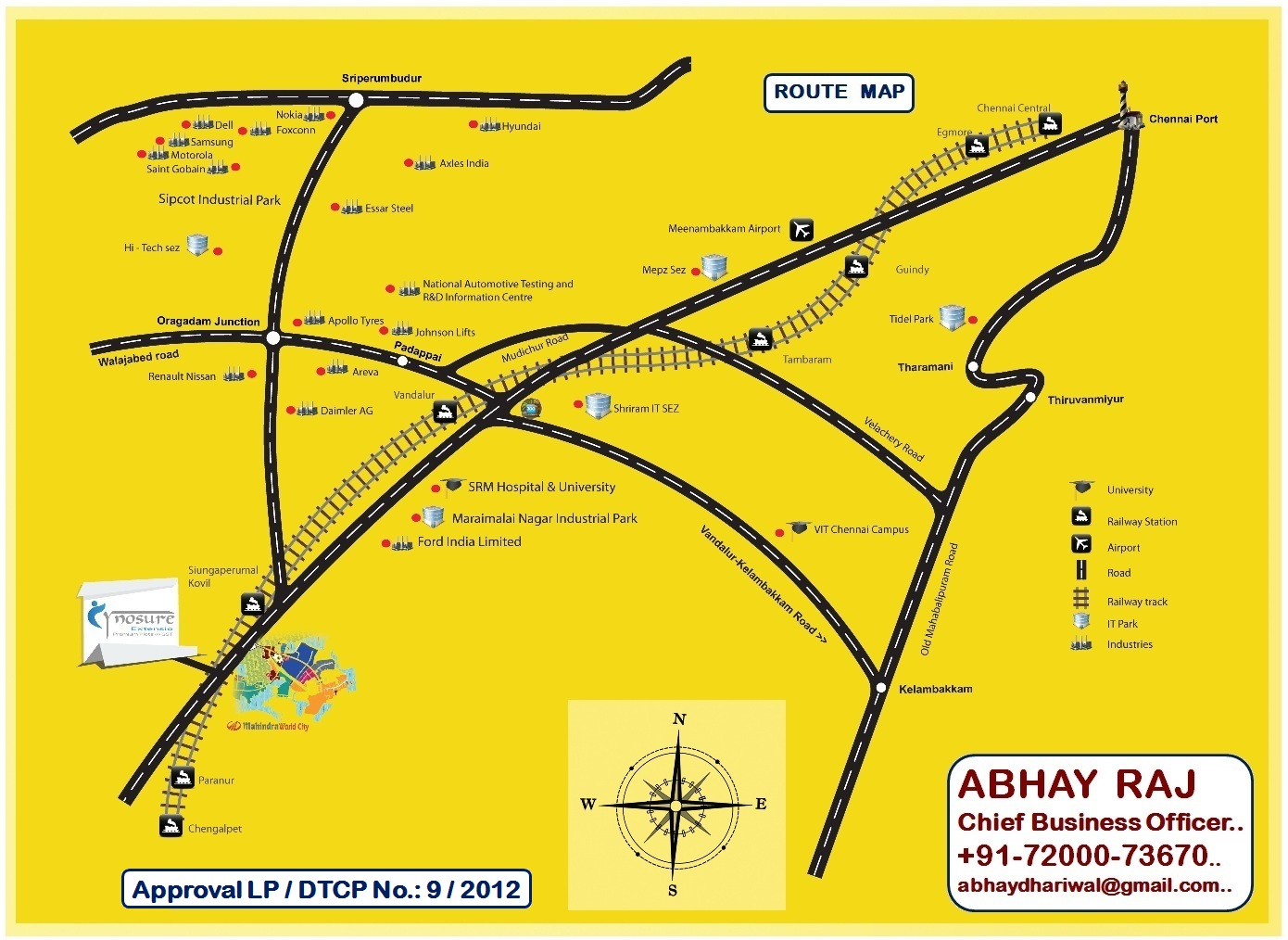 On the business front, the company has unveiled details of Cynosure, a new DTCP project at Singaperumal Koil (SP Koil). Situated on a tar road and Government bus route (Tambaram-Vadagal via SP Koil & MW City) 45km from Kathipara, the entire project boasts tar (black-topped) roads and street lights, a picturesque location, pollution-free environs, and abundant & potable underground water. Dr Raj said while the Govt Guideline value for the project was Rs.900/- per sqft, the Rich India selling price is only Rs.599/- per sqft. For more information on you can purchase plots, visit the Rich India website. Daily site visits are arranged from our offices by air-conditioned cars, as per your convenience.
Tuesday, March 13, 2012 Improved Performance in IT/ITES Services Boosts Demand for Residential Properties
INCREASED JOB SECURITY IN THE INFORMATION TECHNOLOGY (IT) AND INFORMATION TECHNOLOGY ENABLED SERVCIES (ITES) ARE LIKELY TO HELP SPUR DEMAND FOR RESIDENTIAL PROPERTIES IN CHENNAI, ACCORDING TO LOCAL MEDIA REPORTS. Property sales in Chennai rose in the final quarter of 2011 on increased buyer interest, a trend that was followed in most Indian metros. Over the past year (2011), by contrast, residential sales in Mumbai dropped by 28 per cent. Interestingly, the preferred size for 3BHK apartments has also increased since the end of the recession. Jones Lang LaSalle India's residential services head for Chennai, Siva Krishnan, claims this is down to an improvement in the performance of IT and ITES industries. "Over the last 12 months, it has become increasingly evident that Chennai’s residential real estate market is significantly dependent on the IT/ITES sectors," Mr Krishnan told City Express last month. "With employment stability in these sectors looking a lot better now than it did in 2010, demand for homes has now reached a comfortable and dependable growth trajectory from which developers are taking their market cues."
ABOUT 13 DEGREES NORTH, 80 DEGREES EAST, THAT IS WHERE YOU WILL FIND CHENNAI. Formerly known as Madras. Capital of Tamil Nadu, and spiritual home for all of the South Indians (in my point of the view the real Indians, untouched by the Aryan invasion, and bearers of the Dravidian purity.) But that is another story. According to Wikipedia Chennai is a city divided into five talukas: Egmore-Nungambakam, Fort Tondiarpet, Mambalam-Guindy, Mylapore-Triplicane and Perambur-Purasawalkkam. Just like Tokyo in the 1980s and Sydney in the 1990s/2000s, and just like other big cities in India, purchase and rental values in Chennai are going through the proverbial roof. The prices may be high, but there are many NRIs who think that Chennai is a bargain place to invest:
That's right, the NRIs are returning to the Motherland, hoping to convert their foreign earnings into Indian property. Chennai is one of the places they are flocking to. Do Tamil real estate agencies try to force interested parties into buying property, as this video infers? -- that would seem to be the standard Indian sales technique. Whatever the case, one thing which will strike any NRI once they return to Chennai is, Chennai has changed. Is Chennai a good place to live, or at least spend some time? My old Lonely Planet Guide to India didn't seem to think so, calling this a city of oversized billboards (I have to confess I love billboards in Asian cities, whether they be in Mumbai or Bangkok or Saigon!) On the Ganga Mail (aka Bishwanath Ghosh) wrote in April 2009, quoting newcomers: "'People here are more civilised. They let you be," says Pooja Dey, a 27-year-old homemaker who moved from Kolkata to Chennai ten months ago. 'In Kolkata, they are overfriendly and that can get onto your nerves. Besides, I find this place much more developed and a lot cleaner.' Pooja's husband Sushanto, 30, whose family runs the SreeLeathers chain of stores that sell leather goods and who is now set to open its outlet in Chennai, nods in agreement. 'Recently, some parties called for a bandh in Chennai (the Feb 4 bandh in support of Sri Lankan Tamils), but life was normal on the bandh day. In Kolkata, a bandh literally means a bandh. Everything comes to a standstill. That way, law and order in this city is good.' Sushanto goes a step further to praise Chennai's roads and traffic, even though many hardcore Chennaiites would be hesitant in sharing his enthusiasm. 'It is still a pleasure to drive in Chennai, at least when compared to driving in Kolkata, where the rickety Ambassadors really test your patience," he says. "Pooja and Sushanto must listen to what a Tamilian -- who was born in Chennai but grew up in Kolkata and then returned to Chennai to study and went to Mumbai to pursue an impressive career and who has now returned to Chennai to spend his post-retirement years -- has to say. 'I still feel Kolkata is the best place to live among all the metros. People are very social, the cost of living is low. That will be my first choice,' says G Ananthanarayan, who retired a few years ago as a vice-president of Larsen and Toubro (L&T) and now lives in Ashok Nagar..."
w h e r e + i s + t h e + b e s t + p l a c e + t o + l i v e + i n + c h e n n a i ? WHETHER YOU ARE AN NRI OR NOT, HERE ARE SOME PRIME PLACES TO LIVE IN CHENNAI: ADAMCITY: Otherwise known as Adambakkam. Elevation 7 meters. Wikipedia says: "Adambakkam is surrounded by suburbs such as Alandur, Palavanthangal, Nanganallur Vanumpet, Puzhuthivakkam, Velachery and Guindy. The residents mostly belong to the middle and upper middle classes. Unlike many other suburbs in Chennai, this place has more individual houses rather than apartments and so it makes an ideal residential place."
w h e r e + i s + t h e + b e s t + p l a c e + t o + i n v e s t ? WHETHER YOU ARE AN NRI OR NOT, HERE ARE SOME PRIME PLACES TO LIVE IN CHENNAI: India has also surpassed China as the leading country of origin for internationapen Doors 2002 report, published by the Institute of International Education (IIE) said. "Interestingly, around 30 per cent of the visiting Indian students are women. The report released by the IIE observed that more than 67,000 Indians are currently enrolled in the institutions of higher learning, with the Chinese closely following with 63,000. In 2003 itself, nearly 90,000 Indian students enrolled in American colleges. Overall, India accounts for 11.5 per cent of international students enrolled in American universities. "Studies reveal that almost 90 per cent of foreign students stay back in the US because immediately after completing education, they are allowed to work legally for a year to gain 'practical work experience'. During this period, most students seek employers' help in converting their visa from student visa to H1 visa , whereby they can work for three years, extendable by another three years." "In such a scenario, a freeze on visas signifies that eventually, the rate of growth of the American economy will be inversely affected as Indians and non-Americans comprise a huge chunk of the potential workforce. Tightening of visa norms post-September 11, an outcry against US jobs being filled by Indians and reducing the cap on H1-B visas maybe America's way of safeguarding jobs." There will be more about this particular incident life later in the article, and the impact on Indo-Malaysian relations. But first I want to trump up the positives to working in Malaysia -- there is enough negativity in the world as it is, without me adding to it.
o n l i n e + p r o p e r t i e s SO, YOU HAVE MADE UP YOUR MIND -- YOU WANT TO LIVE OR INVEST IN CHENNAI. Well, here are some jobs for those looking for jobs in Malaysia, specifically the Kuala Lumpur area, and specifically in the IT trade. If you are interested in studying IT or another tech or other field in Malaysia, there is a special site for you -- click here:
99 Acres: http://www.99acres.com/Chennai-Real-Estate.htm.
Ad-Mag: http://www.admag.com/0/?cityid=14&lang=en&search=&catid=0&view=ads.
BBC City Paark: Valsarwakkam, Chennai.
Chennai Flats: Chennai Builders.
Craigs List: http://chennai.craigslist.co.in/apa/.
GetAFreelancer: http://chennai.craigslist.co.in/apa/.
Indian Space Research Organisation: http://www.isro.org/.
Jobs in Dubai: Dubai's Largest e-Recruitment Service.
JobsDB: http://www.jobsdb.com/MY/EN/V6HTML/JobSeeker/jobalert/jobalert_e.htm.
Job Street: http://my.jobstreet.com/default.htm.
MicroLand: http://www.microland.com/.
Metroplots: http://www.metroplots.com/.
Sulehka Classifieds: http://classifieds.sulekha.com/chennai/alllocalities/real-estate/allsubcategories/adlistings.aspx.
Target Homes: Pallikaranai.
Terraspace: Pallikaranai.
TVH Lumbini Square: Purasaivakkam.
n e w + d e v e l o p m e n t s Many new Residential Projects have been launched by Navin Housing & Properties in Chennai. The details are as follows: Dayton Heights: A multi-storey residential apartments located at Nelson Manickam Road Merrylands: Three bedroom residential apartments located at Maedavakkam Subha Mangala: An upcoming project featuring two and three bedroom apartments. Brookfield: Another upcoming residential project having provision for two and three bedroom apartments. Rajamani: A new residential project comprising eight apartments and four floors. ". "This was the outcome of a dawn swoop in search of illegal immigrants on one high-rise apartment in the ethnic Indian dominated Brickfields neighbourhood in central Kuala Lumpur. "'There were around 270 of us, and we have already got the signatures of 178, and we'll get the rest by Monday,' said Dilip, an IT professional, who presented a petition to the Indian High Commission on behalf of all those detained after being released on Sunday night. "A Malaysian police officer had earlier told PTI that some 164 Indians had been picked up during a raid on one building adding they were released following the intervention of the Indian High Commission and proof that they had valid visas. "Some showed they were working for companies registered in Malaysia's Multi-media Super Corridor, the Information Technology project zone running from Kuala Lumpur to the new development of Cyberjaya, some 45 minutes' drive away, he said. "'This has been a black day for all of us,' Indian High Commissioner Veena Sikri said addressing the detainees after their release. ""We have taken the matter to the highest authority, and we will get to the bottom of the issue.' "There were, in addition, three further ethnic and religious groups whose political and economic importance in Malaya far exceeded their numerical strength. Two were important business communities the Chettiars, a money lending caste from Madras, and the South Indian Muslims (Moplahs and Marakkayars) who were mainly wholesalers. The third group were the Ceylonese Tamils who were employed principally in the lower levels of the Civil Service and in the professions. "The close correspondence between the ethnic and occupational divisions of the Indian community was inevitably reflected in the community's geographical distribution in Malaya. The South Indian Tamils were concentrated mainly in Perak, Selangor, and Negri Sembilan, on the rubber estates and railways, though a significant proportion found employment on the docks in Penang and Singapore The Telegus were mainly on the rubber estates of Lower Perak and parts of Selangor, while the Malayalees were located predominantly in Lower Perak, Kuala Lumpur, parts of Negri Sembilan, and Johore Bahru. The business communities, the Gujeratis, Sindhis, Chettiars, and South Indian Muslims, were concentrated in the urban areas, principally Kuala Lumpur, Penang, Ipoh, and Singapore. The Ceylon Tamils were also mainly an urban community, though some were found in rural areas working as subordinate staff on the estates...." The Tamil Nation goes on to record: "Despite the fact that the Indians constitute about 8% of the country's population of 22 million they own less than 2% of its national wealth. According to The Economist (22nd Feb 2003), they make up 14% of its juvenile delinquents, 20% of its wife and child beaters and 41% of its beggars. They make up less than 5% of the successful university applicants. The story of the Indians has been a case of progressive deterioration from the time Malaysia became independent in 1957..."
o n l i n e + f i n a n c e RupeeTalk HAS SOME GOOD ARTICLES, CALCULATORS AND ONLINE TOOLS FOR THE INDIAN HOME BUYER. You can, for example, compare home loans from the likes of ING Vysya, the Bank of Baroda, and Citibank. It has some advice like this: "On average, your monthly home loan repayments should not exceed 40% of your gross monthly income to calculate an affordable repayment amount. This ensures that you maintain your lifestyle and still afford the loan repayments, in case, interest rates rise." If you are looking for some financial resources on the Internet, here is a rough but growing guide: Public Bank Berhad: 68 Jalan Tun Sambanthan, Brickfields. Phone: 03/2272 5930, 03/2273 6494.
g e t t i n g + t h e r e To get to Little India from Masjid Jamek station you can take either the Star LRT or Putra LRT.
| ||||||
|
| |||||||



 Amongst other things Bangalore is the centre for Indian space. As in the exploration of space... Outer Space. The
  This is a resource bank for people who want to live, study or travel abroad. There are listings of jobs, schools, places of accommodation, translators, hostels, discussion forums and information about travel and visas. You can search jobs by location, and category. Naturally, Information Technology (IT) gets a high priority on the Malaysian page, and the last time I checked, there were jobs available at such places as SK InfoTech, Adance Marine Services (database developer), Vantronic Industries, Technexel (Java developers), NTi Systems & Solutions in Subang Jaya (IT technician), Northern VIT in Penang (web developer), Applied Business Systems in Kuala Lumpur (Oracle consultant), and so on, and on. The service is available in English, French, German and Spanish.
 Listing upcoming residential projects, flats, land and houses, with an exclusive Chennai focus. Properties are available in Adambakkam, Adyar, Alapakkam, Annanur, Ashok Nagar, Chromepet, ECR, Egmore, Guindy, Kellys, Kilpauk, KK Nagar, Mandaveli, Mylapore, Otteri, Padi, Pammal, Porur, Red Hills, Saidapet, Sembakkam, Tambaram, Ullagaram, Vandalur, and more.
 Bengaluru/Bangalore Jobs. Times Jobs seem to specialise in jobs in India and the Gulf. The last time I checked (October 7 2009) they had 8314 jobs listed in the Bangalore metropolis, covering international call centre staff, Oracle retail sales audit, invoice matching, accounting, hardware engineering, and so on. The spiel reads: " Bangalore is THE place to be if you need an IT Job or want to work in that industry. If you are looking for a Job in Bangalore, register on TimesJobs.com to view and apply to available jobs..." Feel free to post your resume here.